


The EOI: A Quick Look
When applying for the 189, 190, and 491, you have to be invited to apply for a visa through EOIs. The Expression of Interest (EOI) is a formal document that states your desire to apply for a visa application in a specific subclass.
In submitting the EOI, there are points that are attributed to certain factors which we’ll be talking about more of.
If you’re thinking about the fee when submitting this, there’s no government charge when submitting your EOI.
🟠 Learn more about each General Skilled Migration visa here:
Skilled Independent (subclass 189) visa
Skilled Nominated (subclass 190) visa
Skilled Work Regional (subclass 491) visa
Steps to submitting your EOI
1 Create an EOI in SkillSelect
2 Personal Details
3 Education Profile
4 Skills Assessment
5 Employment History
6 Confirmation of Points for Skilled Migration Visa Subclasses 189, 190, and 491
7 Declarations
🟠 Need specific guidance making your EOI? Watch how Nick walks us through the step-by-step process.
Application ≠ Approval
This is a gentle reminder to note that an EOI submission, doesn’t guarantee an invitation and a visa application doesn’t mean approval. If you follow the process and submit all the requirements, getting a visa grant is possible.
Points-Based Progress
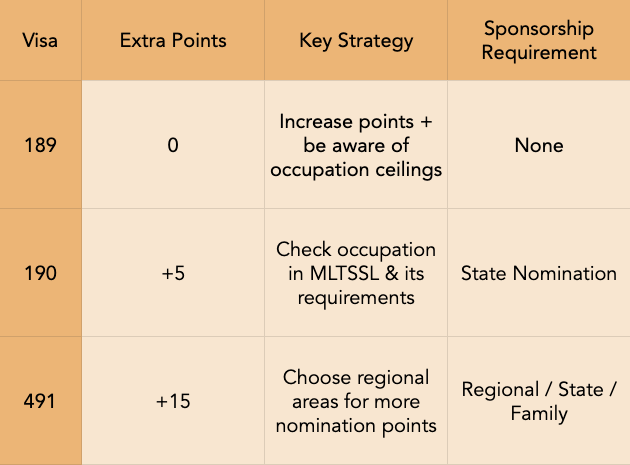
The Points Test checks if you meet the qualified ranking score in certain criteria: age, language skills, education, Australian work experience, overseas work experience, and partner skills.
189 Visa
Needs at least 65 points
Tip: higher points = higher chances of invitation (consider also occupation demand)
190 Visa
Needs at least 65 points (include 5 extra points for state/territory nomination)
Tip: occupation must be on the state list and meeting state requirements = higher chance of getting a nomination
491 Visa
Needs at least 65 points (include 15 extra points for regional nomination)
Tip: choosing regional locations = additional points + higher chance of invitation
🟠 Note: Federal Immigration & State/Territory and Regional Migration: State Migration Program Priorities
Thinking of studying in Australia too? You can.
- Find a course or choose one of the Trade courses
- Fill out the PTA Enrolment Form
3. Book a FREE Education Consultation
The Occupation Competition
The EOI submission is ranked against others that are in the same occupation as you. This applies for the 189, 190, and 491 visas. You’re competing for an invitation within the pool of the same job position.
The competition that happens here are with:
- Other EOIs that are in the same ANZSCO occupation
- The same visa subclass (189, 190, and 491)
- With similar or higher points
Say, for example, you’re a Wall and Floor Tiler, your EOI is ranked against other Wall and Floor Tilers, and not Plumbers or Automotive Electricians.
Who gets invited first?
There are several possible factors as to deciding who gets invited to the rounds.
- Points Score
65 points is the minimum score
There are occupations that require 80 and above points for 189 invitations. - Date of Effect (DOE) – the date when you last updated your points score
The longer the time, the higher the probability of an advantage (Ex. An applicant with 90 points since February has an advantage over someone with 90 points since September)
If you get to increase your points, much better - Occupation Ceilings (especially for 189)
There are times though that isn’t the case though. Immigration chooses occupations depending on what the government guides them to pick.
It’s recommended to follow Immi’s updates and Australia’s job trends to get a wider perspective. - Government Priorities
Even if you have high points and consider the occupation ceilings, the government and Immigration can still decide to:
Invite certain occupations
Have a certain amount of invitations issued
Prioritise visa subclasses
We have to remember that you’re competing for an invitation in a national and global scope.
Competition Standings

Practical steps you can take
- Increase your points
- Focus on state nominations instead of solely banking on the 189
- Keep updated on occupation ceilings and invitation trends
- Treat your EOI like your job CV that also needs updating
🟠 Get more information about pre-visa application processes in our EOI and ROI articles.
Immi’s Selection Round-Up
Monthly basis: generally for the 189 and 491, but the frequency can vary due to different factors (migration program year, application backlog, and occupation demand)
Quarterly basis: Est every 3 mos, federal immigration will choose from the applicant pool, and send out invites.
Ex. 200 invites for teachers = take the 200 teachers with the highest points and send them invites
State-specific basis: State migration might also choose an occupation and send invites as well.
🟠 Need help about your specific situation? Feel free to Contact Us so one of our lead migration agents can guide you.
EOI Validity Period
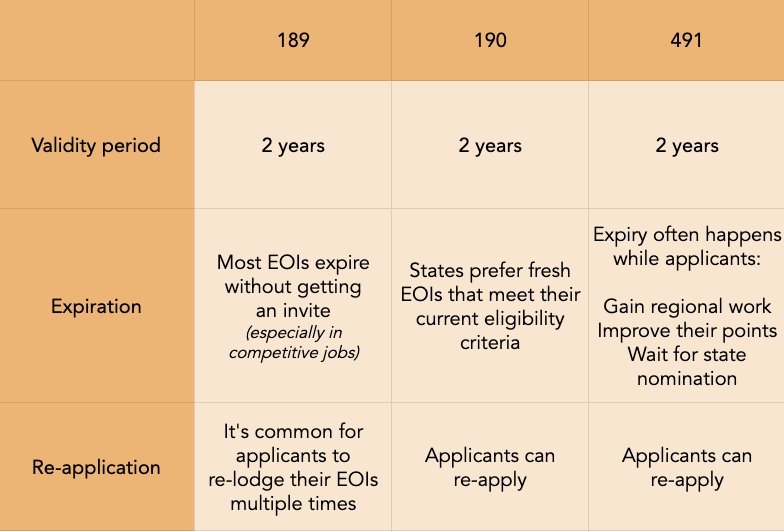
For the 189, 190, and 491, your EOI is valid for 2 years (24 months) from the exact date of submission. This general rule applies across the board.
During the 2 years your EOI is valid, it can:
- Be considered for each invitation round
- Be ranked against others in your occupation
- Be updated for changes
- Be used by states to select candidates (applicable to the 190, and 491)
When the EOI expires automatically, what happens then?
This means a couple of things
- It’s no longer considered for invitations
- Your EOI is removed from SkillSelect
- You’ll need to submit a new EOI
Things to Keep in Mind
- Improving your points doesn’t extend your validity period
- Validity doesn’t affect your ranking
- Your EOI being in the system longer ≠ higher chance of invitation
The Reality of the EOI
Not getting an invite during the validity period of your EOI is common. The length of time of your EOI doesn’t equate priority.
🟠 You lodged your EOI already, what’s next? Here are the things you need to do.
After Receiving the Invite
- You’ll receive an Invitation to Apply (ITA)
- Only those who are selected in the invitation rounds are invited to lodge a visa application
- There’s a deadline which you have to comply to when lodging your visa application
- There’s usually a 60-day period of lodging
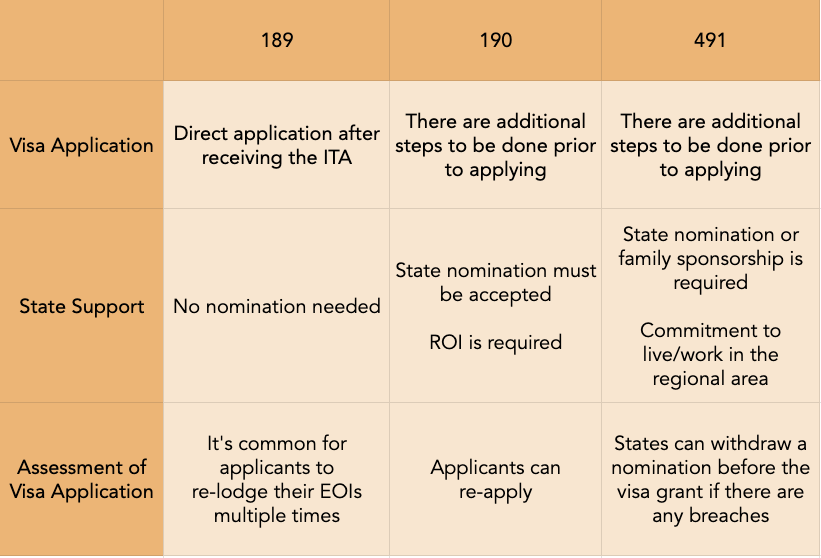
Before lodging your visa application
Ensure that the information you have provided is accurate, true, and evidence-based. Review key information like: work experience dates, employment duties, English proficiency results, and points claimed.
Information Essentials
- Identity
- Skills & Employment
- English proficiency
- Points claim
- Health & character
Lodging your visa application
1. Log onto the ImmiAccount
2. Select your visa subclass (189 / 190 / 491)
3. Complete the visa application
4. Attach supporting documents
5. Pay the application fee (AUD 4,640) *fees are subject to change
6. Your application is officially lodged after payment
🟠 Starting on your application journey? No worries, we’ll take you through the steps in applying for your visa.
Bridging Visa Key Points
Applicable to 189, 190 & 491
The important thing to know is that during the EOI stage, the bridging visa isn’t necessary in this situation. An invitation is only permission to apply, and not a visa grant or guarantee.
During the invitation stage, if you’re onshore, you have to have a valid visa; and if offshore, you have to stay outside of the country. The bridging visa doesn’t apply to offshore applicants.
If you’re located in Australia and your current visa will expire before a decision is made, and you have formally lodged your visa application — this would be the only time when a bridging visa is necessary. Immigration will automatically grant a Bridging Visa A (BVA) for you.
The EOI Recap Guide
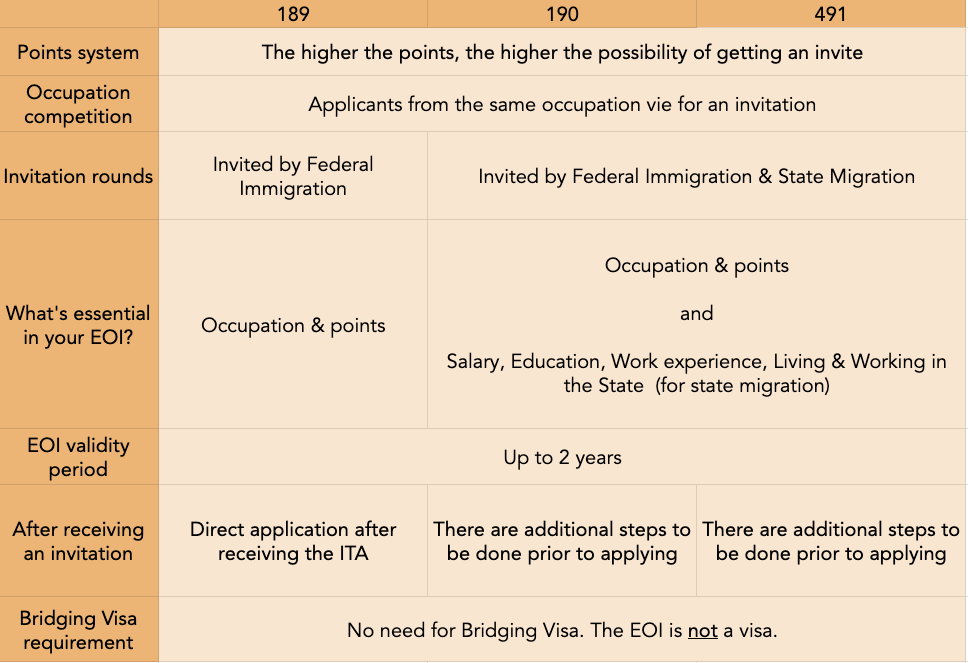
With all these things considered, we hope this clarifies and helps you in your visa application and if you need more specific information about your situation, you can always book a Migration Consultation with one of our expert migration agents.