
Extend Your Stay in Australia
A working holiday visa has a fixed end date. Before it arrives, it helps to know which options may still be open to you, because some rules changed on 2 October 2026.
This guide covers five common routes: a second or third working holiday visa, a work or skilled visa, a Partner visa, joining a partner's visa, and a Student visa. Each section says what to check first.
Extend Your
Working Holiday Visa
If you are eligible, a second Working Holiday visa (subclass 417) or Work and Holiday visa (subclass 462) may let you stay another year. Eligibility depends on your passport and age.
A second visa generally needs at least 88 days of specified work in an eligible regional area during your first visa. A third generally needs six months of specified work during your second.
On 17 September 2026, the Government announced a ballot for second and third year visas, with 45,000 and 5,000 places. The regional work requirement would still apply first. Start details had not been confirmed at the time of writing, so check Home Affairs before you plan around it.

Alternative options
for extending your stay

Applying for
Partner Visa
If you are currently in a De Facto or Spousal relationship with an Australian resident or citizen, then you may be eligible for a partner visa. Firstly you will be issued as a temporary visa, and later you can apply for your permanent visa.

Be Added to your
Spouse/De Facto's visa
If you are in a de facto or spousal relationship with a partner that currently holds or is about to apply for another Australian visa, then you may be eligible to be added as a secondary applicant.

Applying for
Work Visa
Depending on your skills, work experience and education you could be eligible for 482 Employer Sponsored Visa or General Skilled Migration Visa. Further details about the requirements down below.
Applying for
Student Visa
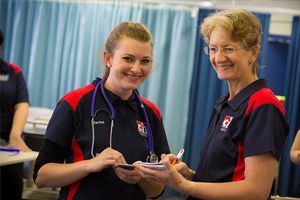
For many working holiday makers studying a course in Australia may be the most affordable way to extend their stay. If you study the right course, it could also put you on a pathway to applying for another work visa.
Partner Visa
If you are not eligible for a second working holiday visa you still have other options such as partner visa.

Partner Visa
If you are married to, or in a de facto relationship with, an Australian citizen, permanent resident or eligible New Zealand citizen, you may be eligible to apply for a Partner visa. Applications are generally assessed in two stages: a temporary visa first, then a permanent visa later.
To meet the de facto requirements, you generally need to show that you and your partner:
- Are mutually committed to a shared life to the exclusion of all others
- Are in a genuine and continuing relationship
- Live together, or do not live separately and apart on a permanent basis
De facto couples generally need to show 12 months of relationship before applying. Exceptions may apply. Home Affairs considers the financial, household, social and commitment aspects of the relationship.

Visa Approval
To have your visa approved, you must demonstrate that you have been in the de facto relationship for at least 12 months before submission of the application. In some states in Australia, you may be able to waive this requirement by registering your relationship.
Immigration officials will judge your de facto relationship based on:
- The Financial Aspect
- The Nature of the household
- The social aspect of the relationship
- The couple's commitment to each other
Joining a Partner's Visa
If your partner holds, or is about to apply for, an Australian visa, you may be able to be included in their application. This depends on their visa type and when it was lodged. Working Holiday visas generally do not allow secondary applicants.
Student visa (subclass 500)
Rules for family members changed on 2 October 2026:
- Student visa applicants can generally no longer include a partner or dependent children. Limited exemptions apply, including PhD study, DFAT or Defence sponsorship, a foreign government scholarship, or being an eligible student from a Pacific or ASEAN country.
- Family members cannot be added after a Student visa is granted. Home Affairs states there are no exemptions to this rule.
- If family members are already included in a current Student visa and the holder applies in Australia, they may be able to be included again in the next application.
- Applications lodged before 2 October 2026 continue to be assessed under the rules in place when they were lodged.
Other visas
Family inclusion rules differ for work and skilled visas. A migration agent can check your partner's visa.
What to weigh before lodging
Timing: the lodgement date of your partner's application may change which rules apply.
Visa length: a secondary visa generally depends on the main visa and may end when it does.
Relationship history: if your relationship was not declared on earlier visa applications, get advice before lodging anything.
Case Study
A French girl named Rose met an Argentinian man named James in Australia, and they began a relationship. Rose was on a working holiday visa that was due to expire, while James had a student visa for a course that would not finish for another 18 months.
Rose did not want to study a course in Australia and had no other visa options that would allow her to work in Australia. Neither Rose nor James had declared their De Facto Partnership on their previous visa application.
Our Support and Solution
With a little work, we were able to successfully add Rose as a secondary applicant to James's student visa without cancelling his original student visa. By providing the correct supporting documents, Rose had her visa granted roughly three weeks after we made her application.
Rose was granted a secondary applicant student visa, with limited work rights (40 hours per fortnight). Her visa would expire the same day as James's student visa.
**Note: This case study predates the visa rule changes introduced on 2 October 2026. The options outlined may no longer apply to your circumstances. Please speak with our migration agents for advice on your current situation.
Work in Australia
Work visas depend on your occupation, experience, qualifications and, in some cases, an employer. Family members may be able to be included in some applications.
Skills in Demand (subclass 482)
The Skills in Demand visa is a temporary visa that lets you work for an approved sponsoring employer. For the Core Skills stream, you generally need:
- A job offer from an employer who agrees to sponsor you and is an approved sponsor
- An occupation on the Core Skills Occupation List
- A salary at or above the Core Skills Income Threshold, which is AUD $79,423 for nominations lodged from 1 July 2026 to 30 June 2027 and is indexed each year
Earlier clients have moved from working holiday and Student visas to employer-sponsored visas, including Paolo and Tom. Rules have changed since, and outcomes depend on individual circumstances.
Read our tips for finding an employer willing to sponsor or explore the Skills in Demand visa.
General Skilled Migration (subclass 189 or 190)
These are permanent visas that do not need a job offer. You generally need:
- An occupation on the relevant skilled occupation list, with a suitable skills assessment
- To submit an Expression of Interest in SkillSelect and meet the points test
- An invitation to apply from Home Affairs (subclass 189) or a state or territory (subclass 190)
Submitting an Expression of Interest does not guarantee an invitation. Points test changes have been announced, so check current settings before relying on a score. Jose is one past client who followed this route.
Estimate your points with our calculator or read about General Skilled Migration.
Student Visa
Study can allow you to stay in Australia for the length of a course, and some courses may lead to other visa options later. It is not a route to any particular outcome.
What changed on 2 October 2026
Most temporary visa holders in Australia, including working holiday makers (subclasses 417 and 462), can no longer lodge a Student visa application while in Australia. If this applies to you, you generally need to be outside Australia when you lodge and when the visa is granted. Some exemptions apply to current Student visa holders applying for a further course. Home Affairs lists the affected visas on its Subclass 500 Student visa page.
Enrolment alone does not establish visa eligibility. You must also meet the Student visa requirements, which include the Genuine Student requirement, financial capacity, health insurance and English language where required.
Work rights and fees
Student visa holders can generally work up to 48 hours per fortnight while their course is in session, and unlimited hours when it is not. Higher degree by research students have different rules. The Student visa application charge is from AUD $2,500 for applications lodged from 1 July 2026.
Course fees vary by provider and campus. Ask for a written fee quote before you enrol.
Check your financial capacity, find a course, or read the full guide to the 2 October 2026 changes.

English Language Schools
($150 – $300 per week)
General English, IELTS, English for Academic Purposes.
Vocational Institutions
($100 – $200 per week)
Vocational Courses include: IT, Management, Fitness, Business, Accounting, Nursing, Childcare, Automotive plus many more.

Trade Courses
Courses available include: Carpentry, Joinery, Automotive Mechanical, Painting and Decorating, Engineering Fabrication