


Not sure how these migration changes affect your plans?
👉 Speak to our registered migration agents.
Graduate Visa Fee Has Jumped to $4,600
One of the biggest surprises came on 1 March 2026 when the visa application fee for the Temporary Graduate Visa Subclass 485 increased dramatically.
The new application cost is now at $4,600 which is more than double what the applicants were previously paying.
What caught many people off guard is that these visa fee increases usually happen on 1 July each year. But because this change came in March, so many students and migration agents were not expecting it.
The 485 Graduate Visa is commonly used by international students who have completed their studies in Australia. It allows them to stay in the country temporarily to:
- Work full-time
- Gain Australian work experience
- Potentially transition into employer sponsorship or skilled migration pathways
With the higher fee now in place, if you are planning your post-study migration pathway, you will likely need to factor this extra cost into your plans.
Want to know which courses can lead to the 485 Graduate Visa and future PR pathways?
👉 Explore Study Options in Australia
Minimum Salary for Sponsored Workers Increasing
Another major update is the increase to Australia’s Temporary Skilled Migration Income Threshold (TSMIT).
From 1 July 2026, the minimum salary required for employer-sponsored workers will rise to $79,499.
This change mainly affects applicants applying for employer-sponsored visas such as:
TSMIT sets the minimum salary an employer must offer when sponsoring a worker from overseas.
What This Means for Visa Applicants
If you are planning to apply for a 482 employer-sponsored visa, your salary will need to meet the new threshold once the change takes effect.
This update isn’t just for new applicants, either. This may also affect people who are currently on a 482 visa and planning to transition to permanent residency through the186 visa.
In some situations, if the salary being offered is slightly below the new threshold,
it may be beneficial to lodge the nomination before 1 July 2026.
Thinking about employer sponsorship in Australia?
👉 Learn How Employer Sponsorship Works
Why Does TSMIT Increase Each Year?
The TSMIT threshold is adjusted regularly to reflect changes in Australia’s labour market and wages.
The main purpose of the TSMIT is to ensure that skilled migrants are paid fairly and they cannot be used as a cheaper alternative to hiring Australian workers. The government/s aim is to maintain wage standards across industries by setting a minimum salary requirement.
Another reason for regular increases is inflation and general wage growth. As salaries rise across Australia, the government adjusts the threshold to keep employer-sponsored visas aligned with the broader labour market.
In simple terms, the increase helps ensure that employer-sponsored workers are paid at a level consistent with Australian salary expectations.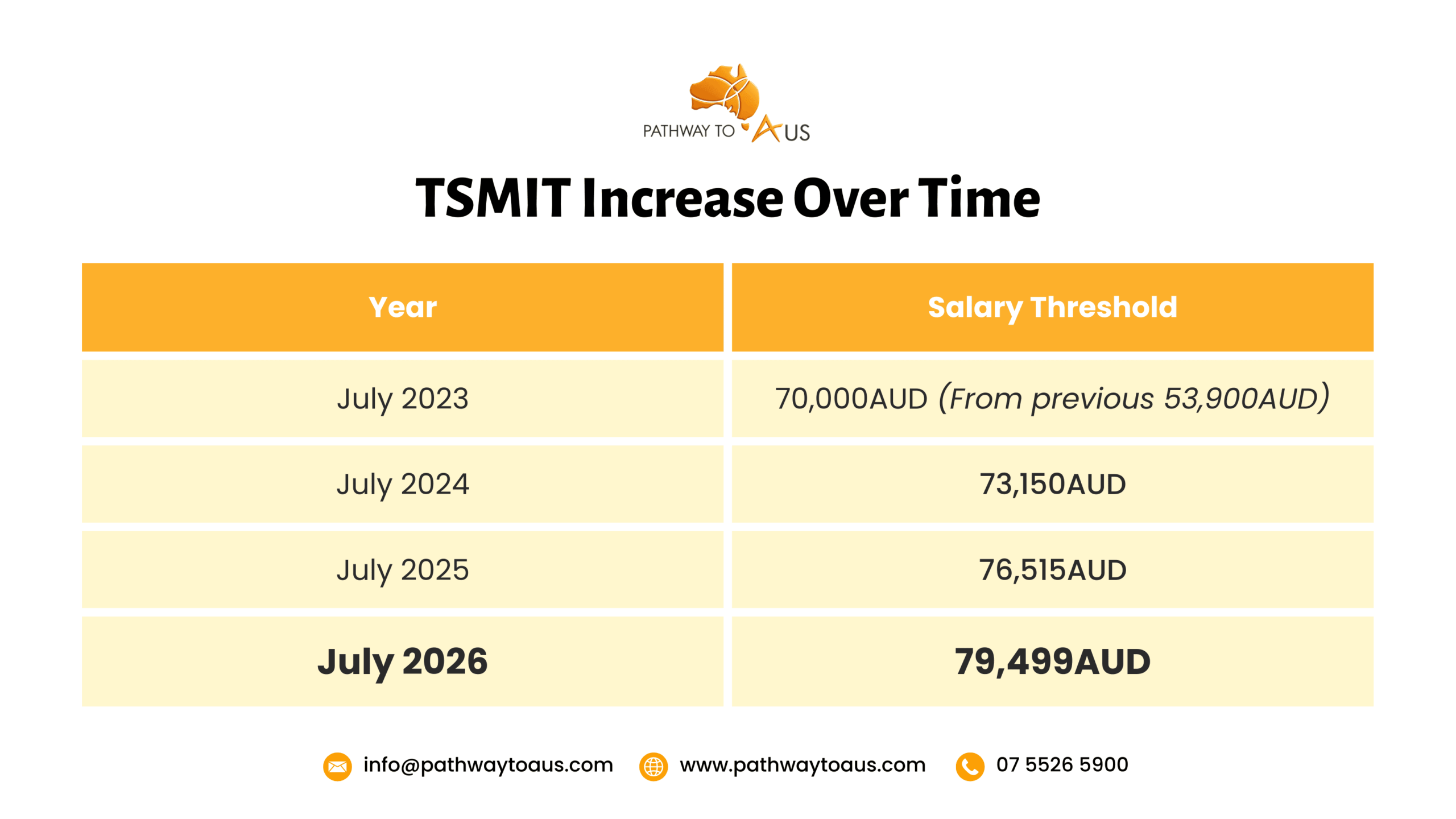
Some Occupations May Have Reached Their 189 Invitation Quota
There is a new information released through a Freedom of Information (FOI) request has also provided insight into invitation numbers for the Skilled Independent Visa Subclass 189.
This visa is one of the most sought-after permanent residency pathways in Australia because it does not require employer or state sponsorship.
According to the data released, several occupations appear to have already reached their invitation quota for the current migration program year.
These occupations reportedly include:
- Chefs
- Engineers
- ICT professionals
If these quotas have been reached, applicants in these occupations may not receive further 189 invitations until the next migration program year begins on 1 July.
State Nomination Pathways Still Available
Even if invitations for the 189 visa slow down, there may still be opportunities through state and regional migration programs.
These include:
Each state and territory governments run their own nomination programs. Which means invitations can still happen depending on occupation demand, location requirements, and available quotas.
Want to understand your PR pathway options in Australia?
👉 Read Our Guide: How to Migrate to Australia