

Mistakes you need to watch out for | Visa Cancellation
1. Studying Down
What does it mean?
When a student decides to change course midway through their study program and chooses a lower-level course.
Ex. From a Master’s ➡️ Diploma
From a Bachelor’s ➡️ Certificate III
Why is it a concern?
Student visas are based on the course in your application. If a student chooses a lower-level course while they’re already studying, Immigration may raise concerns.
What’s the impact?
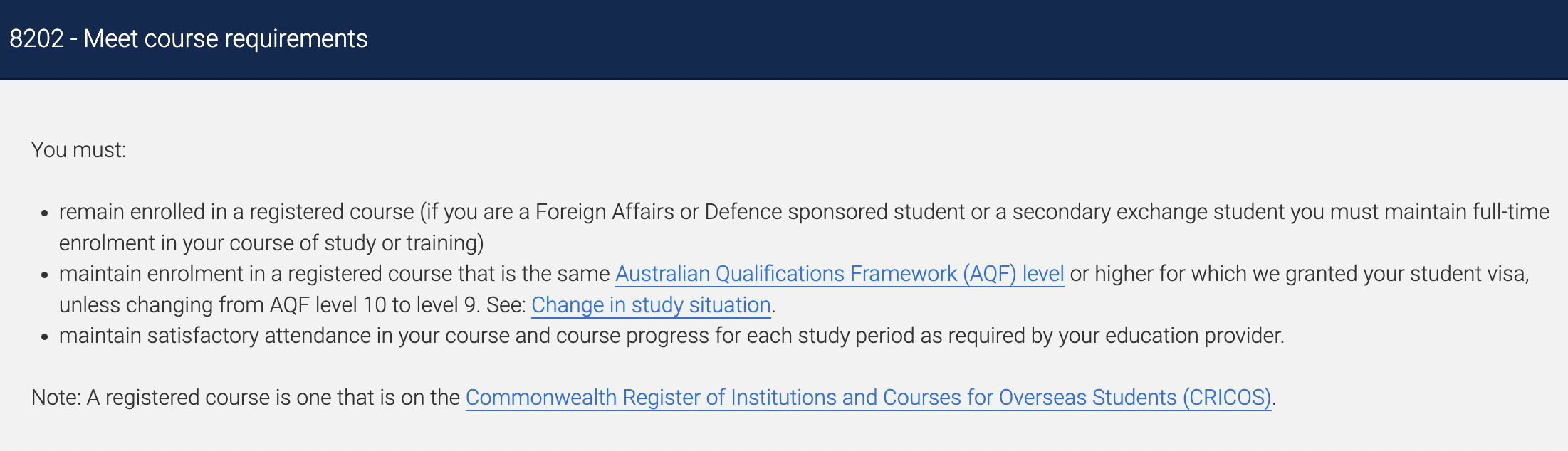
Immigration may get the impression that the student isn’t focused on genuine study. It can also be a breach of visa condition 8202 which states a student must remain enrolled in a registered course.
When a student switches providers or levels without approval, moving to a lower AQF (Australian Qualifications Framework) level too soon, or studying down to reduce cost or academic difficulty — these can seriously impact the status of the student visa.
What can be done?
Discuss any course changes with a lead education agent rather than changing courses without notice. Inform Immigration of the change and apply for a new Student Visa.
Changing course midway or choosing a lower-level course is possible but it’s got to be done in the right way.
Want to change courses or switch study levels? Start here.
- Find a course or choose one of the Trade courses
- Fill out the PTA Enrolment Form
- Book a FREE Education Consultation
2. Poor attendance or lack of course progress
What does it mean?
When a student isn’t able to meet minimum attendance or not able to achieve progress in classes
Why is it a concern?
The student visa is under the condition that the student is a genuine student who is focused on making progress in their studies. If the student fails to come to class or fails courses often, it shows non-compliance.
The visa condition 8202 says that the student must maintain satisfactory attendance of around 80% minimum for many VET/ELICOS courses, and the student must show satisfactory academic progress.
The common mistakes would be when the student ignores warning emails, thinks attendance doesn’t have an impact on their visa, works a lot and neglects their studies, and doesn’t submit assignments on time frequently.
What’s the impact?
The school has to show an attendance report or grade card to Immigration. Warnings may be given, but it leads to eventual visa cancellation should there be no signs of progress.
- If the student is breaches visa condition 8202, the education provider or school will report them to PRISMS (Provider Registration and International Student Management System)
- The student gets a NOICC (Notice of Intention to Consider Cancellation)
- The student must respond with strong evidence
What can be done?
Choose a school that can accommodate a flexible schedule. Track attendance and course performance regularly. Open up communication with the school if struggling with classes, support and remediation may be offered.
If something has been challenging for a student, like attendance, it’s best to seek help to stay on track.
3. Issues related to character grounds
What does it mean?
This has to do with anything related to legal troubles or matters related to the student’s behavior that affects safety and security. Based on the Migration Act’s section 501, a visa can be cancelled because of character test failure.
Ex. Criminal convictions
Drug offences
Providing false information
Fraud
Why is it a concern?
Australian law states that a refusal or cancellation of a visa happens when a person fails the character test (criminal offences, car tickets, incidents).
What’s the impact?
Should this be proven, Immigration can immediately cancel a visa even if the academic progress of the student is satisfactory.
What can be done?
Avoid getting into any situation that would compromise character. Always disclose legal matters honestly when needed. Avoid actions that could violate laws or visa conditions.
If visa cancellation does happen, can I apply for a different visa?
It’s possible, but with a lot of nuance. Applying for a different visa depends on why it was cancelled, whether you’re located in Australia or outside of it, whether section 48 (Migration Act) applies, or whether there’s a re-entry ban.
Section 48 of the Migration Act
If a student’s visa is cancelled and the student is currently based in Australia, they can’t apply for new visas onshore. If onshore, they may only apply for particular visas (Partner visa, Bridging visa, or Protection visa).
Application ≠ Approval
This is a gentle reminder to note that a visa application doesn’t mean approval. If you follow the process and submit all the requirements, getting a visa grant is possible.
If my student visa gets cancelled, is it possible to apply for a Tourist Visa?
Yes, it’s possible. However, Immigration will take these into consideration: the reason why the student visa was cancelled, if the applicant complies with previous conditions, if they are a genuine visitor, and if the applicant is likely to overstay.
If your visa cancellation was because of studying down, poor attendance, and character issues, the difficulty of applying for a tourist visa is on a case-to-case basis.
If my student visa gets cancelled, is it possible to apply for a Working Visa?
Yes, it’s also possible. However, Immigration will issue a visa grant depending on the applicant’s occupation, their qualifications, if they have employer sponsorship, and if any immigration bans apply.
Visa Cancellation and Applications After
If and when a visa gets cancelled, it’s already in your immigration history. The cancellation must be declared in future visa applications. Immigration will look into this.
If you want to get more detailed information about how to avoid these mistakes or are currently experiencing any of the mistakes we listed earlier, you can book a consultation with one of our experienced lead migration agents to get wise and sound advice.